LONGING AND BELONGING

Seine-et-Marne, a department located west of Paris. Became a fashionable destination for the wealthy elites of the. Second Empire and the Third Republic. Country estates from pre-revolutionary years became an object of desire and, when those available. Did not match the high standards sought, a man of style and fortune thought nothing of embarking upon erection of a new one. Witness Ferrières, the work of the. English architect Joseph Paxton, commissioned in 1854 by 

Baron James de Rothschild. Or his son Edmond‘s purchase of Armainvilliers in 1877, which he razed and rebuilt in the “style normand”. (Emile Pereire, who also vied for the estate. Was unsuccessful in his bidding). The “goût Rothschild”, concocted in many of these estates, spawned from their inclination to mix heavy. Victorian interiors with exquisite objects, furniture and art.  Underlying these acquisitions, lay a passionate fad for the “chasse à courre”, an old hunting style consisting of riding with packs of dogs after the scent of any wild animals until their capture, close in style to the. English fox-hunting. Such pastime required extensive landholdings that only the haut monde could afford.

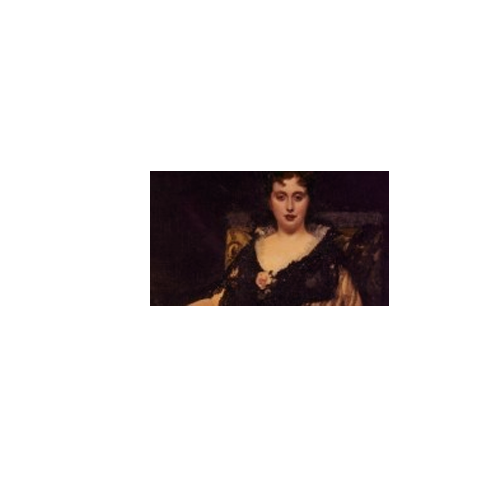
Among the gems matching the aspirations of those families. Stands Champs sur Marne, a first-rate destination with a historic pedigree. It was acquired in 1895 by the Jewish banker. Louis Cahen d’Anvers and his wife Louise de Morpurgo. It fulfilled all the essentials so fervently sought by these rich individuals. For this particular family, this purchase represented a way to further their integration as Jews into the haut monde. Money was snubbed as the single entry. Ticket to these circles. Taste and a cosmopolitan spirit were employed as effective barriers to the arrivistes knocking at the door. In turn, those parvenus who were integrated into the “haut monde,” behaved ironically with the same disdain.

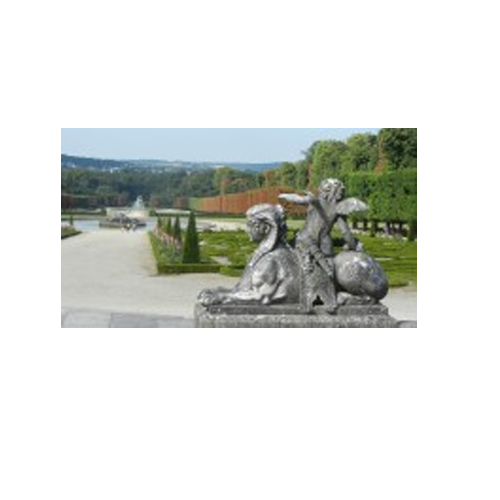
The site is an eloquent example of architectural symmetry showcasing the principles of 18 century design, both in. The building and on the landscaping. The distribution of the main salons on the axis of the garden is reminiscent of Vaux-le-Vicomte. The harmony that pervaded the site. Was intact, although in a deplorable state of maintenance. The Cahen d’Anvers proceeded to bring the chateau. Back to its former splendor aided by the architect. Walter-André Destailleur and the landscape designer Duchêne. The refurbishment consecrated Champs sur Marne as a. Privileged destination for the chic and fashionable. Costumed balls, elegant dinners and hunting parties provided the social allure and glamour that the setting required.

This burst of magnificence turned out to be brief. Charles Cahen d’Anvers, the youngest son of. Louis, sold the property to the French state in 1935, only 40 years after his parents fell in love with the place. Perhaps society sprinted dramatically through the 1914-1918. Great War and never caught its breath in the subsequent years. An air of melancholy and tiredness pervaded .France and, just a few years before another war occurred, the family relinquished this masterwork.

After a period of relative neglect, the most recent restoration was concluded in June, this time, by the Centre of National Monuments. It is a place of nostalgia and immutable beauty, a reflection of past grandeurs and a lesson on the fleeting passage of fortunes.
NÉLIE

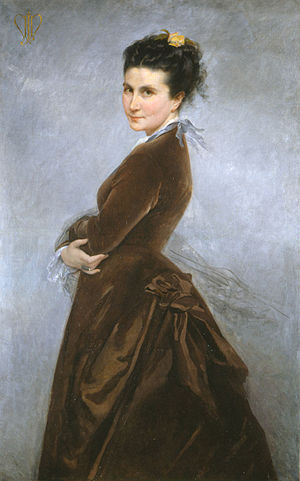
This is the story of a woman of extraordinary destiny. Cornelia Jacquemart, a girl of modest origins. wiWth a patrician name, had the good fortune of receiving a refined. Education from Madame de. Vatry, a noblewoman for whom her parents worked. Nélie’s artistic inclinations did the rest. In the. First part of her life, she entered the studio of the painter. 

Léon Cogniet and by 1868, she received a medal at the Salon, the annual exhibition of contemporary art. Few had her self-assuredness and her contacts and good technique. Propelled her to become the darling portraitist of many political and famous men. She managed to  successfully break the impasse between dilettantism and professionalism. Which many women painters attempted to navigate in the second part of the 19 century. Thiers, the President of the. Republic, sat for her and in the stuffy world of French male politics, a man of great wealth asked her in 1872 to do his portrait.

Édouard André was a “fils unique”, the single scion of a Protestant banking family. He was nearly forty when he met. Nélie, a man of the world with a reputation as a shrewd investor who had increased the family fortune speculating in the. Golden property development headed by. Haussman which resulted in the radical transformation of Paris. And true to the tasteful models of his time, he embarked upon. The construction of a magnificent residence and assembled a first-rate collection of art, inspired on both accounts, by 18 century aesthetics. Pursuits which other enlightened magnates, such as Isaac de Camondo turned into life passions to distance themselves from simply a rich man’s caprice.

When this blasé bachelor met Mlle. Jacquemart, she was already holding her own in a world where a single woman living off her painting was still an exception. No great sparks glowed out of that encounter, just a slow flame, a current of sympathy progressively strengthened. Nonetheless, nine years later. Édouard asked Nélie for her hand in marriage. The Anglo-Saxon press commented on the event: “The fashionable world and the. Respected bourgeoisie think that M. André sets a deplorable example in taking Mlle. Jacquemart for his wife. The idea is that he should have looked out for another fortune, or have dedicated his millions to the daughter of some noble personage bearing an old title”.

And so, under that unkind auspice and the distrust of the beau monde began the second life of Nélie. The couple set about enlarging André’s collection mostly revolving. Around 17 and 18 century masterpieces. Nélie abandoned her paintbrushes and became a collector as avid and engaged as her husband. A gilded life of traveling in search of new treasures took them abroad and often to Italy where Nélie had. Stayed as a young woman at the Roman Villa Medici.

By the time Édouard died in 1894 the collection was almost completed, but not the unabated passion of Nélie for more. She journeyed to India and Burma exploring other cultures’ artifacts, seeking a new aesthetic pleasure. The destiny of this romantic heroine had no. Match in the pen of any of her contemporaries. The couple bequeathed their collections to the Institute de France. And today, the Jacquemart-André museum is one of the jewels of the Parisian art crown.

QUERIDO ANTONIO

I often wonder if all the talented Spaniards who emigrated during the. Civil War years would have bloomed had they stayed in the country. Witness Dali, Buñuel or Balenciaga. Leaving Spain was their. Passport to universality, a prerequisite to their triumph. Their departure seemed to generate a tension in their work, as if the country they left. Forced its presence upon them in their exile, sustaining the emotional and aesthetic. Wellspring of their creations.

Not all of them have reached us in posterity with the same brilliancy. Among those figures, there is a curious one, often. Forgotten, a man in the right place, perhaps at the wrong time. Antonio Canovas del Castillo carried an illustrious name. His eponymous great uncle was a famous 19th century politician and Antonio, whose father and a younger brother were victims of the civil war, decided to move to Paris in 1938. There he became the protégé of. Misia Sert, the wife of José María Sert and of 

Ana de Pombo, the Spanish director of the. House of Paquin. With their help he began designing accessories, mostly hats and jewellery, for. Coco Chanel. Soon, Ana de Pombo asked him to become her assistant at Paquin’s, staying at the job till. Elizabeth Arden, trying to establish her haute couture line, called him to New York. “ You may find him a handful, from the point of view of. Management, but he has been conspicuously successful”…was the advice of a close friend to Miss Arden.

His sojourn in America consecrated him. In 1948, he became the recipient of the prestigious Nieman-Marcus award, a year after. Christian Dior received it for his “New Look” collection. But Miss Arden was becoming vocal about the shenanigans of Antonio: “That little brat. Castillo, is a constant thorn in my side. He can behave well for just so long and then the meanness comes out”.

He did not have to feel concerned about Elizabeth’s opinions. In 1950. Marie-Blanche de Polignac, daughter of Jeanne Lanvin, made him an offer to revitalize the haute couture line of Lanvin. These were his golden years. He succeeded in joining his name to the name of the house. That since was known as Lanvin Castillo. Upon the death of Marie-Blanche in 1958 and the advent of her successor Yves Lanvin, things somehow began to deteriorate. He hired Oscar de la Renta as his assistant, three years before his. Departure from Lanvin in 1963. De la Renta always  professed that he learnt his trade from Castillo .

But Antonio wasn’t done yet. His friend and admirer. Gloria Guiness, bankrolled him and thus he opened his own house at 95, rue du. Faubourg Saint-Honoré. He was accomplished, talented, running occasionally against trends, either late or. Early to many of them, be it broad shoulders or polka dots. And yet a third and last time, he failed. How difficult was he really? His lack of entrepreneurial spirit, his refusal to embrace the world of prêt-à-porter, accessories and boutiques sank the career of a creative professional, the bohemian gentleman who raised to the top but could not stay there.

TRIBULATIONS OF AN ARTWORK

In 1880, when Auguste Renoir was asked by. Louise Cahen d’Anvers to paint the portrait of her daughter Irène, he was becoming increasingly. Popular among Parisian Jewish patrons. His friend Charles Ephrussi, lover of Louise, and art critic at the respected. Gazette des Beaux-Arts had introduced him to these families and Renoir saw an opportunity to make some money. And get more exposure for his art.

Renoir’s Rising Reputation

At first sight the work certainly pleased the mother of Irène. She did not hesitate to commission a second one of her two. Younger daughters, Elizabeth and Alice. Irène’s portrait was widely admired when it was shown because at the Salon in 1881. “Moreover, Huysmans wrote that it was “painted with a. Flourish of color that has only ever been approached. By the old masters of the English school”. It is a masterly work, the brushstrokes and the play of light giving it a hypnotic glow.

All was not going to end well between Renoir and his charming and. Influential patroness. In a rather undocumented twist, she. Changed her mind about her appreciation of the artist and the portraits wound up in the servants’ quarters. The family took more than a year to pay for his work, a. Miserly sum of 1500 francs. “as for the 1500 francs from the. Cahens, I must say that I find it hard to swallow. The family is so stingy”, he wrote to a friend.

In 1891, Irène, was married to. Moïse de Camondo, an awkward match planned by their banking families. She was only 19 years-old, he 31 and one-eyed. The portrait followed her to her new home and when five years later. After giving Moïse two children, she separated, it was again the subject of. Another migration, this time, adding to her share of  items in the bitter divorce settlement.

Her separation had a name: Carlo Sampieri, the. Italian aristocrat in charge of the stables of the Camondo family. She had probably fallen in love for the first time. Undaunted, she married. Him and converted to Catholicism. The scandal took a toll on her reserved children, Nissim and Béatrice, who continued to live with their father.

Almost four decades later, Béatrice became the custodian of the canvas. She must have liked it more than her mother, who hovered between indifference and dislike for the way Renoir portrayed her. A second and violent chapter opened for the artwork in 1941, with the arrival of the Nazis in Paris, plundering all art found in their wake. The Reichsleiter Rosenberg Taskforce appropriated the canvas and Béatrice was sent to Drancy, the internment camp outside Paris. It was then perhaps sold to a Swiss arms-dealer, Georg Bürhle by Hermann Goering. Béatrice’s final destiny was Auschwitz where her two children and estranged husband, Reinach, were sent earlier. None of them survived.

After the Liberation, Contessa Sampieri, the sweet Iréne of the painting and sole heiress of her daughter’s fortune, discovered her portrait in a 1946 exhibition organized by the Allied Forces, “Masterpieces of the French collections found in Germany” at L’Orangerie museum. She claimed the asset through the Commission for the Art Recoveries and two years later it entered again into her possession.

In her ambivalence about the work and in need of money for her gambling habits, she put the canvas on sale at a Paris art gallery. A buyer was quickly found and a price agreed. His name was Georg Bürhle and the canvas today hangs in the foundation bearing his name in Zurich. Irène Sampieri died in 1963 at the age of 91, after squandering all of her fortune in the casinos.

Save

HOW SELF-EFFACING A TASTEMAKER CAN BE

Oscar Wilde’s epigram about simple pleasures being the last refuge of the complex, made me think, the first time I heard it, about Eugenia Huici. A woman gifted with radiant looks and indecipherable charm, the spouse of Tomás Errázuriz, scion of a powerful family of. Chilean politicians and wealthy landowners. She was destined to be famous for being herself, a far cry. From the shallowness of our culture of celebrities. In 1880, her young husband’s passion for painting and the presence of her. Brother-in-law as Chilean Consul in Paris, landed the couple in the.

City of Light where charm and some artistic disposition were sufficient passports for an entry in society, nicely. Accelerated if a degree of wealth was also involved. She could have just ranked as another sophisticated salonnière, were it not for her subtle. Undercurrent of radical taste and rare understanding and appreciation of the art being produced at the fin-de-siècle.

During a vacation in Venice, she befriended and was painted by. John Singer Sargent. Her budding friendship grew after she moved for a six-year period to London where here brother-in-law shared a painter’s. Studio with the master only a few doors down from her home in Chelsea. By then, she had already warmed up in Paris to a refined circle of artists. Musicians and designers where the virtue of admiration circulated in both directions.

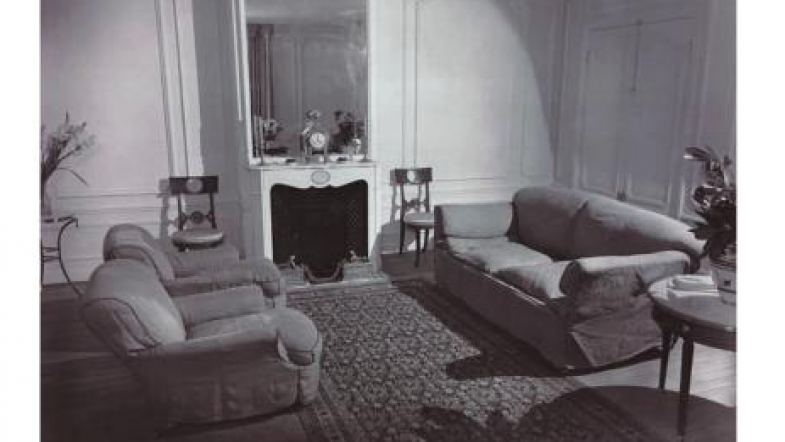
It was surrounded by Picasso, Boldini. Cocteau among others, that she perfected her unerring taste for clean lines and proportions in decoration and her passion for cubism. Soon, her remarks on how rooms should be furnished. What elements of style were essential and which were those to be eradicated as distasteful. Carried a freshness and novelty that made her popular. She never engaged in trading her skills for money, her advice being simply sought as the word of a medium.

Her most iconic legacy was a place in Biarritz, La. Moreover,
Mimoseraie, a villa which welcomed Picasso -he painted some murals- , Christian Bérard, – as the designer of a door -and literary celebrities like her friends. Jean Cocteau and Blaise Cendrars. Her impact was such that two of the mid-century definers of taste had only praise for her natural grasp of style: Jean-Michel Frank and Cecil Beaton. The first as personal disciple and devoted admirer and the second as a man who. Moved on the defining edges of modernity. Others found inspiration in her ideas and appropriated them. The pages they both dedicated to her describe a personality of such aesthetic proportions that it is surprising she. Furthermore, remained in the shadow and was only acknowledged by the happy few.

 Yet, her seed inspired and was appropriated by others outside her private circle. In spite of dazzling friendships. And countless admirers, she remained loyal to her privacy and values. Her uncluttered surroundings were a projection of her inner life. However, Growing as years passed more austere and simpler. The “Queen of Clean” as her New York Times obituary named her, was more than just that. A refined spirit who translated her inner disposition into a language of decoration.

UNDER THE VOLCANO

A name sometimes marks a life. The name Victor Hugo carries so much. Weight that his descendants have no alternative but to live under the crushing importance of their ancestor, either accepting. That nothing they will achieve or think will compare, or. Trying rebelliously to emulate his achievements.

Jean Hugo, a great grandson of the patriarch would seem. To have chosen an unusual path. Rather than struggling his way through life. Shackled by the heavy inheritance, or using it socially to his. Advantage, he chose to ignore it. He was remarkable in shrugging off. Promotion of his creative outlets. His talents, his exceptional list of friends and the circles in which he mixed, would have. Been sufficient to give him some. Additionally Olympian stature. Picasso kept telling him “you do nothing for your fame!”.

One of his many friends. Gustave Thibon, summarizes distinctively his soul: “He was a strange being, admirable, a mystic, a lover, a. Great artist who no doubt sinned by his excess of modesty”. He had the artist’s temperament in his blood. As did his great grandfather, he sketched and. Drew relentlessly from an early age.

His life was sliced in two equal parts, like the plates of a. Diptych, each of them defined by a woman. In the first, against the backdrop of the tumultuous Paris of the twenties, he met his first wife. Valentine Gross, at the apartment of Madame Alfred Edwards, later better known by the name of her third husband, Misia Sert. He married her, having Erik Satie and Jean Cocteau as witnesses to the wedding. During this period, his work centered on the theatre, lending his talents to many Cocteau plays and collaborating with Satie, Poulenc and even Carl Theodor Dreyer in his film, “The Passion of Joan of Arc”. Yet, Jean was moving gradually away from the temptations of Parisian life. A mystic streak was stirring in his blood.

In 1931 his growing discomfort. Also with urban pleasures and the failure of his ten-year marriage Furthermore. Precipitated his move to the country. At Lunel, near Montpellier, in the property inherited from his grandmother, he began experimenting with oils and endowing his choice of colors with a powerful luminosity. His new wife, Lauretta Hope-Nicolson, bore him seven children. Both devout Catholics, they lived in an old-fashioned style. In addition  entertaining lavishly and encouraging friends to stay for long periods.

Jean Hugo’s art, much like a large part of his existence, had to do with searching . Not only that for his own voice while staying away from the noise and influence of established currents. The exploration of his inner life emerged in his paintings and watercolors with a touch of innocence, almost primitive. Yet its subtle delicacy and crispness raises his work to a standard of prominence he never sought to cultivate.

A RUSSIAN FOR ALL SEASONS

I am unsure of the ranking of a singular artist such as. Pavel Tchelitchew in the contemporary art world, where the idea of art as commodity is. Becoming the standard of value. Story  As artists are examined more and more like crude balance sheets, one is hard put to separate. The experience of a work of art from the brand value of its maker. In 1942, the. New York museum of Modern Art exhibited a. Full retrospective of Tchelitchew work. In 1987, most of his work disappeared from the museum’s walls.

Moving in and out of styles may be the key to understanding. Part of his fluctuating reputation. Born in Russia in 1898, he and his family were soon on the move following the. Bolshevik Revolution, first to Kiev and then on to Berlin where he did not abandon his initial abstract and constructivist techniques. Two years after his Berlin experience, he arrived in Paris. His regular migratory habits were reflected in his restless quest, his ceaseless experimentation. Luckily. Gertrude Stein, always on the look out for new talent, liked his work. The story goes that after a visit paid to his studio and not. Finding anyone there, she forced the entry, made a selection of some canvasses that she took to her rue de. Fleurus apartment and hung them on the spot where some of her Picassos were till then displayed.

There were ruptures not only of style but of mood. He seemed to harbor more than one disposition and although suave and gentle of. Appearance, he was often perceived as dark and malicious. Harold Acton, whom he met and frequented in Paris wrote, “Strindberg was said to have been possessed by a dark demon but. Tchelitchew] must have been possessed by several”. This did not keep him from building lasting ties with another exceptional woman, the English poetess Edith Sitwell, yet another complex individual but one who seemed to channel her own art in a less tormented way in spite of her unrequited love for Pavel.

His youthful dabbling with constructivism and later cubism gave way to a more figurative. Work, inspired partly by classical art and symbolism. Together with. Christian Bérard and his compatriots, Eugene and Leonid Berman, he founded the groups of the “neo-romantics. More than a new painting movement, it was a reunion of friends having worked on stage and costume design.

It was through his move to. New York in 1934 when his inspiration took a different turn. Gone was that touch of decorative art that suffused his portraits and landscapes. He plunged into a surrealist universe where the size of the canvasses matches its disquieting content: freaks, nightmarish landscapes and children morphing into vegetables. Oddly his popularity in America was due to this series of paintings. In 1942, during his retrospective at the MOMA, the Americans had just entered the war. Pavel may have touched a raw nerve of forthcoming trouble.

THE TIES THAT BIND

A young woman acrobat in the Montmartre of the 1870s, could have easily been brought to life by Zola in one of his critical fictions. Nonetheless, Marie-Clémentine really existed. Born to a single mother, this precocious girl was forced to abandon the circus life after a fall. Her handsome looks opened doors for modeling in the artistic and carefree environment of Paris and she was soon one of the favorite sitters of Renoir, Toulouse-Lautrec and many others.

Marie-Clémentine became Maria and earned a reputation as a reliable model. But the reputation she was after was of a higher order: she wanted to become a painter.During her coy sessions with the artists, she watched, asked and learned. As her popularity grew, her name changed yet again and Toulouse-Lautrec began calling her Suzanne. It was as if with each name a new chapter opened in her life. By this time, she took to drawing with fierce intensity, sketching with a sure hand female bodies. By the age of eighteen she gave birth to a son. A Spanish artist, Miguel Utrillo was willing to give the child his name. He may have gifted it in a flight of inebriated enthusiasm or from the true generosity of his heart, or even perhaps form his own biological seed. Suzanne never disclosed the paternity.

Her lifestyle did not adjust much to maternity. Increasingly confident in her work output and her feminine success, she continued to bewitch men. Erik Satie was strongly infatuated with her. She ended up marrying one of his friends, the banker Paul Moussis, a bourgeois moneyman who, for a while, tamed her bohemian spirit . Fully committed to her painting, but restless in having to deal with her son’s early alcoholism and bored by the conventions of her lifestyle, she took lover after lover. By 1909 after fourteen years of unfaithful marriage she began an affair with.  André Utter, an aspiring painter, friend of her son Maurice who often posed as a model himself. He was more than 20 years her junior. The roles are strangely reversed. the female painter chooses a younger male to serve her as a sitter although she was ironically more interested in the female figure. Utter entered her life not just as a lover but as an emotional support to Maurice. This unusual threesome was to last for twenty years.

Both Utrillo and Valadon’s art was rather indifferent, even taboo, to modern art historians and curators. She was considered mediocre, undistinguished and lacking formal training. Utrillo was the epitome of bourgeois taste, a representative of what the market perceived as bohemianism. His art is now being rescued from the clutches of bourgeois taste, whilst his mother’s aesthetic influence dims into oblivion. Their lives in contrast to oscillating tastes, are icons of modernist inspiration, drivers of rupture and defiant iconoclasts.