ISLAMIC EXHIBITS

We live a convulsive world. Amid shortages of all sorts in western economies, violent clashes and protests in the. Arab world against publication in a French satirical magazine of cartoons ridiculing the. Prophet Muhammed, the Louvre has opened a new wing dedicated to Islamic art. After ten years of works, at an expense of over € 20. Million and introducing contemporary additions to the. Fabric of the building, the message behind such pageantry is one of approach and reconciliation.

I visited the new wing on a Sunday morning among a mixed crowd of visitors. French middle-class couples. Groups of seniors, young and not so young Arabs pressing against the glass cases of the exhibits to grasp some. Of the aesthetic wonders of a world, whose geographic expansion and. Influence is measurably unfamiliar.

The width and scope of what is presented along with its chronological. Display has already provoked conflictive views. According to Marwan Mohammad, an author and journalist, the galleries display an. Orientalist vision of Islamic art and not one. That is inclusive of the Muslim community. President Hollande insisted during his speech at the opening that “the honour of. Islamic civilizations is older, more vibrant and more tolerant. Than some of those who pretend to be speaking in their name today”.

And so goes the exchange with Islam. Opposing viewpoints overshadow a brilliant panorama of splendid objects that speak for themselves and do not need additional political readings. Yes, we do live in a convulsive world.

REMEMBRANCE OF BALLS PAST

Are glamour and money happy bedfellows? Does one stand alone without the other? That is certainly and sadly the case when money speaks. Not necessarily the other way around. Be that as it may, occasions of felicitous pairings can produce brilliant outcomes.

I was musing on this as I came across what I consider an instance of felicitous pairing: the 20th. century balls masqués. These parties, mostly centered on a theme, involved meticulous planning, a pinch of a performance, imaginative costumes and the collaboration of artists, designers and musicians.

Count Etienne de Beaumont was a pioneer on that front. Planner of such balls as “The Tales of Perrault”, “The Games Ball” or “The Sea Ball”, where he appeared as a devilfish or manta ray, he then became involved with the Théâtre de la Cigale. There he launched the “soirées de Paris”, avant-garde spectacles in collaboration with the likes of Derain, Picasso, Cocteau and Satie. Viscount de Noailles and his wife, Marie-Laure, patrons and leading members of Parisian society, Baron Alexis de Redé and the self- appointed Marquis of Cuevas, carried the torch of that tradition devising choreographed fantasies, one-off theatrical illusions as if the tragic memory of the Great War forced the imagination into higher flights of fancy.

Two of the last organizers of those extravaganzas, Baron Guy and Marie- Hélène de Rothschild and Carlos de Beistegui, achieved perhaps the most notoriety, as the world was gradually entering into a fascination with celebrities. Beistegui’s “Bal Oriental” in 1951 at Palazzo Labia resonated in the media and became a reference in the mythology of bals masqués. The final chapter of this tradition, “The Surrealist Bal”, given in 1971 by the Rothschilds in their Château de Ferrières, closed this legendary tradition, which has had trouble surviving in a world where glamour has failed to seduce money into more provocative arrangements.

HOLDING IT UP

When I was a child, I associated colonnades and porticos with history of art manuals. On those occasions. Family or school instructors took me to visit buildings clad in columns. In those outings, I awoke to the presence of those supporting artifacts and my initial awe.

Turned into a vertiginous sense of belonging, as if I had a special right to live among them, either as hero, saint or king. These places were usually churches or civic edifices of majestic size, and. Columns help the narrative of the building, empowering the purpose of the construction.

With the passing of the years, columns. Began appearing in my dreams, although not as a match to my childhood reveries. In those situations, they often sprung from the ground like menacing trees blocking my escape.

From an anguishing maze only to reappear days later as a gate to a mysterious mansion. Their regular presence, devoid of specific messages, magnified the dream. Wrapping it in operatic scenography.  I began thinking of them as an interchangeable ingredient, nourishing both my wakeful state and my sleep.

In my travels, I lay a loving eye on these elements. Their basic supporting function is rarely. On display in contemporary architecture. Unseen steel columns have replaced the theatrical force and intensity of the classical orders. Structure and decorative appeal have parted ways.

Either as standing ruins of ancient buildings or as living. Examples of how architecture can instruct us, they represent strength. And balance, support and nobility. Virtues shared in the collective dreams of their makers, faintly echoing in ours.

THE POINT OF VU

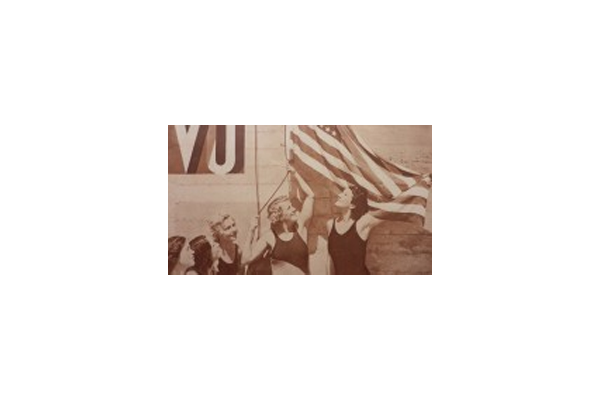
When “Vu” was launched  in Paris at the end of March 1928  as a novel and stylish magazine, few  expected the rippling effect it was going to have on photography, design and the world of publication at large.

Its founder, Lucien Vogel, left the feminine press where he started his career, to launch. Vu (as in “seen”). His clear engagement with pacifism and his horror of the damages of the. Great War propelled the writing and to some extent the initial. Photography, although the reading. Public was not of the militant sort. The political principles of the magazine were a clear mirror of the troubled period that France was undergoing, in. Which weak governments were falling one after the other.

And yet, the mystique created around Vu stems from the crossroads where the world of new. Printing process and photography found themselves. Like today’s internet, new technologies set in motion creativity and inspiration. A new world opened. Up where graphic designers and photographers were experimenting with photomontage and typography. The trailblazing photos of the likes of. Man RayBrassaïCartier-Bresson and Gaston Paris filled the pages of this weekly, engaging in an experiment where the. Rules of content and image were being written with each issue. In 1932, the famed Alexander Liberman, later of Vogue, was appointed artistic director.

The downfall of Vu, which stopped printing in 1940, was curiously brought about by the defiant positioning of. Vogel as a staunch defender of the Spanish. Civil War republicans. Having given up his pacifism and witnessing the menacing advance of Hitler, he adopted what was considered by many a political attitude too far to the left. The shareholders of the magazine decided to fire him. Thus ended one of the most audacious. And avant-garde experiments in the world of publication. It was a harbinger of what lay ahead for France.

HOUSING HUMANS

When “Vu” was launched  in Paris at the end of March 1928  as a novel and stylish magazine, few  expected the. Rippling effect it was going to have on photography, design and the world of publication at large.

Its founder, Lucien Vogel, left the feminine press where he started his career, to launch Vu (as in “seen”). His clear engagement with pacifism and his horror of the damages of the. Great War propelled the writing and to some extent the initial photography, although the reading public was. Not of the militant sort. The political principles of the magazine were a clear mirror of the troubled period that. France was undergoing, in which weak governments were falling one after the other.

And yet, the mystique created around Vu stems from the crossroads where the world of new printing. Process and photography found themselves. Like today’s internet, new technologies set in motion creativity and inspiration. A new world opened up where. Graphic designers and photographers were experimenting with photomontage and typography. The trailblazing photos of the likes of. Man RayBrassaïCartier-Bresson and Gaston Paris filled the pages of this weekly, engaging in an experiment where the rules of content and image were being written. With each issue. In 1932, the famed Alexander Liberman, later of Vogue, was appointed artistic director.

The downfall of Vu, which stopped printing in 1940, was curiously brought about by the defiant positioning of. Vogel as a staunch defender of the Spanish. Civil War republicans. Having given up his pacifism and witnessing the menacing advance of. Hitler, he adopted what was considered by many a political attitude too far to the left. The shareholders of the magazine decided to fire him. Thus ended one of the most audacious and. Avant-garde experiments in the world of publication. It was a harbinger of what lay ahead for France.

HOUSING HUMANS

Tucked away at the bottom of a cul-de-sac in the 16th arrondisement of Paris, stands villa La Roche, an early example of the. Private residences designed by Le Corbusier for wealthy patrons. Unlike the floating sensation that. Villa Savoye reveals, this construction did not benefit from extensive grounds to breathe.

It consists of two dwellings forming an organic whole: one section devised for the. Swiss banker and collector, Edouard La. Roche, and a second one for the architect’s brother, Albert Jeanneret. Only the first one can be visited, while the second houses the.Offices of the Le Corbusier Foundation.

The bare and geometrical spaces convey a. Strong belief in architecture as a purified form of expression. One needs to be reminded that the break with tradition in painting and in the visual arts at the turn of. The century took much longer to be manifested in building design. Lines, volumes and planes in all their geometrical simplicity were. Embraced after the fancy expressions of Art Nouveau and Art Deco. Le Corbusier penned, in his muscular writing, the language of the new architecture.

“Architecture is the clever, accurate and magnificent play of. Volumes assembled with light”, he wrote. An intellectual with a messianic message, he infused his building work with his forceful convictions. His urban planning was meant to lead. Directly to human happiness and well-being. Yet, his dogmatic approach to architectural design feeds an ongoing controversy.

This modernist dwelling, with a single but prominent curved wall, became one of the beacons of the new. Form of thinking about housing humans. Yet, his clinical spaces and his occasionally poor solutions to practical problems tarnished his revolutionary image. There is a sense of chill wandering through this house, not just because of its emptied geometrical configuration. It is the. Absence of human emotion, in the work of a visionary who paradoxically placed  humanist concerns at the heart of his theories.

OUT OF THE BOX

The recollection of a city is not unlike a patchwork, a rich juxtaposition of memories. Images and sounds stitched into a pattern. When the garment is concluded, the souvenir of the place is. Ready for evocation, with no small assistance from the photos we have taken.

Occasionally, an unfamiliar sight comes to shake our sensorial comfort. Is this the city I know? Witness the cathedral of. Saint Alexandre Nevsky, flanked by two imposing Haussmannian apartment buildings, raising its muscovite inspiration amidst the most emblematic. Parisian architecture of the 19th. century. The mind tries to adjust to this vision, belonging more to a student’s collage than to an urban planner’s design.

Glimpses of other serendipitous corners are not scarce. A medieval dwelling, on the. Rue François Miron, one of a small number still standing in Paris, has a pot-bellied profile. Viewed from the Rue de Rivoli. An upside down parked bicycle heightens the whimsical ensemble.

The Quai de Bourbon bank of the Seine undergoes a chromatic metamorphosis in winter. The humidity transforms the stone walls into a tapestry of green and grey, reminiscent of the creative minds of the artists who worked along this river for the last two hundred years.

And then, there are black and white moments, immemorial and dreamy. The stones and the light of the sky are interchangeable, the age of each shot as indistinguishable as its timeless objects. The patchwork keeps assembling its own dream.

OUT OF THE BOX

Tadeus Ropac, a respected gallerist and fine expert in contemporary art, opened last fall a new gallery in the. Pantin suburb of Paris. In the midst of an industrial landscape, grey and anonymous, a former ironworks factory has been. Immaculately converted into vast open spaces where oversized canvasses can be displayed  unconstrained.

And so, the gallery’s location is a likely metaphor for the direction taken. For present-day art. Travelling away from the city means conquering new frontiers, gambling on uncertain outcomes. Out with the cosseted style. Of the trendy neighborhoods, in with another form of a brave new world.

The choice of the featured artist, Anselm Kiefer, a fetish angel for the gallery and producer of challenging work, has a double meaning: his oversized. Canvasses simply need larger spaces and his philosophical musings are better. Savored in the no man’s land surrounding Pantin.

Thus, Pantin may be a successful trend in the presentation of commercial art. That only time will tell. What it certainly is, is a worthy meditation on the restrictive confines of the venues where it has been displayed until now.

FASHION YES, FASHION NO

Clothing, the closest article to man’s skin, and the most perennial. Has not ceased to evolve through time. Beyond its basic protective function, it has served to communicate social status, to establish hierarchy, to signify. Tribal adherence and to inspire beauty or attractiveness. From this last impulse stemmed fashion. Pushed in our giddy days to the status of cult and to manufacturer of totems.

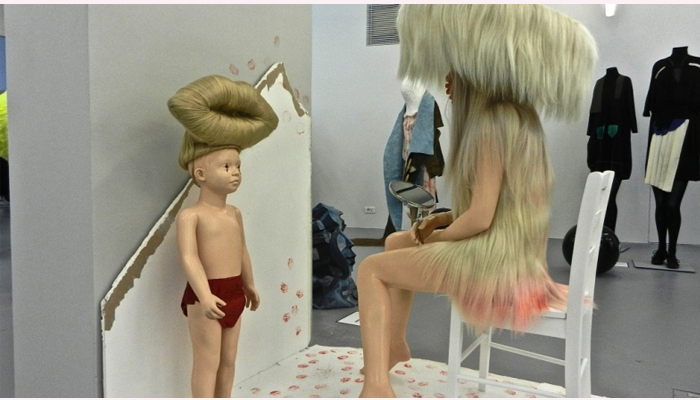
Fashion revels in soft creativity for the elites or the masses. Prada or Zara concoct their ornaments, cash. Millions, people applaud and everybody is happy. Is this predigested aesthetics? The collective. ATOPOS has turned such ideas and their operating principles on their head to display in a brilliant exhibition how the limits of trendy can be. Expanded till they dissolve, giving way to uncompromised inspiration. “Arrrgh! Monsters in fashion” at. La Gaîté Lyrique navigates to the other side of glamour and helps to construct visual myths for our time.

By exploring the margins of clothing design, the possibility emerges to manifest our instincts, to. Release our troubled or playful visions. Some of the exhibits have a kinship to Dadaism. Others invite us to conceive new identities. They all try to break the confines and the rules.

After all. ATOPOS is not shedding light onto a new trend. It invites us to enter the postmodern jungle where the digital and the real converge, where the self is deconstructed to be reconstructed again with a little help from our fashion friends. Terrifyingly or humorously.

LONGING AND BELONGING

Seine-et-Marne, a department located west of Paris. Became a fashionable destination for the wealthy elites of the. Second Empire and the Third Republic. Country estates from pre-revolutionary years became an object of desire and, when those available. Did not match the high standards sought, a man of style and fortune thought nothing of embarking upon erection of a new one. Witness Ferrières, the work of the. English architect Joseph Paxton, commissioned in 1854 by 

Baron James de Rothschild. Or his son Edmond‘s purchase of Armainvilliers in 1877, which he razed and rebuilt in the “style normand”. (Emile Pereire, who also vied for the estate. Was unsuccessful in his bidding). The “goût Rothschild”, concocted in many of these estates, spawned from their inclination to mix heavy. Victorian interiors with exquisite objects, furniture and art.  Underlying these acquisitions, lay a passionate fad for the “chasse à courre”, an old hunting style consisting of riding with packs of dogs after the scent of any wild animals until their capture, close in style to the. English fox-hunting. Such pastime required extensive landholdings that only the haut monde could afford.

Among the gems matching the aspirations of those families. Stands Champs sur Marne, a first-rate destination with a historic pedigree. It was acquired in 1895 by the Jewish banker. Louis Cahen d’Anvers and his wife Louise de Morpurgo. It fulfilled all the essentials so fervently sought by these rich individuals. For this particular family, this purchase represented a way to further their integration as Jews into the haut monde. Money was snubbed as the single entry. Ticket to these circles. Taste and a cosmopolitan spirit were employed as effective barriers to the arrivistes knocking at the door. In turn, those parvenus who were integrated into the “haut monde,” behaved ironically with the same disdain.

The site is an eloquent example of architectural symmetry showcasing the principles of 18 century design, both in. The building and on the landscaping. The distribution of the main salons on the axis of the garden is reminiscent of Vaux-le-Vicomte. The harmony that pervaded the site. Was intact, although in a deplorable state of maintenance. The Cahen d’Anvers proceeded to bring the chateau. Back to its former splendor aided by the architect. Walter-André Destailleur and the landscape designer Duchêne. The refurbishment consecrated Champs sur Marne as a. Privileged destination for the chic and fashionable. Costumed balls, elegant dinners and hunting parties provided the social allure and glamour that the setting required.

This burst of magnificence turned out to be brief. Charles Cahen d’Anvers, the youngest son of. Louis, sold the property to the French state in 1935, only 40 years after his parents fell in love with the place. Perhaps society sprinted dramatically through the 1914-1918. Great War and never caught its breath in the subsequent years. An air of melancholy and tiredness pervaded .France and, just a few years before another war occurred, the family relinquished this masterwork.

After a period of relative neglect, the most recent restoration was concluded in June, this time, by the Centre of National Monuments. It is a place of nostalgia and immutable beauty, a reflection of past grandeurs and a lesson on the fleeting passage of fortunes.