CHARM AND ABSURDITY

Can any individual be one thing and its opposite? Can we harbor irreconcilable selves? The intriguing life of. Count Robert de Montesquiou –Fézensac may illustrate the dilemma.

He cut a wide swath in the precipitous period of fin-de-siècle. Paris, where he frequented and dazzled the élites while distancing himself from them with his extravagance and marginal behavior. He wrote poetry but would never fancy himself a writer. His vitriolic tongue was a barrier that his charm could not keep under control. But control was not his strong suit, rather the opposite, excess with taste. An aristocrat by birth, he spurned the lifestyle of his set, centered in hunting on gaming estates and lunches at the.

Jockey Club, and embraced a unique sense of aesthetics, decorating the upper floor apartment of his father’s hotel at. Quai d’Orsay with improbable materials and designs. Sarah Bernhardt counted him among her elitist friends, a bond that defined their mutual androgynous. Attraction but stopped short of carnal exchange.

 His leanings to occultism and morbid spirituality contrasted with his worldliness. His vanity could not hold him back from. Organizing huge receptions and he amused himself by drawing lists of the “invited” and those “excluded”.  Everybody considered him “absurd” at the very least, but his presence. Glamorized the gatherings of any hostess, who immediately rose in rank if Robert was in attendance.

And as a savvy self-promoter he immortalized his image in the hands of the most respected and fashionable painters:. WhistlerBoldiniJacques-Émile Blanche and La Gándara for whom he posed in a Chinese robe with Mandarin nails and jewelry.

Posterity knows Robert de Montesquiou for having served as the model for the Proustian portrait of Baron de Charlus. Poor Marcel had to suffer the brutal mockery and indifference of his subject as he scampered in his wake. Flattering him to the point of ridicule  (“Your mind is a garden filled with rare blooms”, he wrote in one of his letters to the Count).

Who was the man behind the mask?. Was there an enduring emotion of the heart behind his relentless façade? He certainly was the perfect pick for chroniclers of times past but his obsessive posing tired others who, unlike. Marcel Proust, were not his devoted admirers. When the latter wrote his eulogy so risibly entitled “ The simplicity of the. Count of Montesquiou” everyone in the French press refused to publish it.

CECIL’S SHANGRI-LA

CECIL’S SHANGRI-LA

He was seduced immediately. Ashcombe, a sleepy hollow on the boundaries of Dorset and Wiltshire, was an accident in the life of Cecil Beaton. Staying for a weekend with his friend. Edith Oliver in Wilton, he spoke of his longing for a small cottage in the country, a frequent remark uttered by city guests. Edith mentioned the casual discovery made by a friend of theirs, the sculptor. Stephen Tomlin, of a deserted house with a grotto in the downs. Uncertain of its exact location, the three of them decided to drive in its search.

After motoring blindly around, Tomlin recognized a rough path and the party charged down on foot to a distant cluster of trees. Among holy oaks, they caught a glimpse of the property. It was silent and neglected, long unlived in. As he later wrote in his memoir of the years at Ashcombe: “It was as if I had been touched on the head by some magic wand. Some people may grow to love their homes; my reaction was instantaneous. It was love at first sight, and from the moment that I stood under the archway, I knew this place was destined to be mine.”

Here, at play, is a moment of magic when a desire explodes in the heart at the sight of something or someone very special. All, then, appears possible. The longing creates a vision and. Cecil already saw in his mind what the house would look like.

At 26, still laboring a professional future and not financially strong, the idea sounded preposterous, especially to his family. He was already a budding manufacturer of worlds and a visionary magician. The cautionary advice did. Not prevent him from approaching the owner and agreeing a rent of £50 pounds per annum.

He proceeded to revamp the space and to bring in furniture acquired during his trips abroad. Succumbing to the decorative fashion of all white. The perfectly idyllic retreat, a resplendent paradise and a magnet to friends was thus created. Visitors came and went and as with so. Much of his oeuvre, it soon was wrapped in a certain mystique.

When the lease could not be renewed, he tore himself away from it with nostalgia and a sense of deep loss. Ashcombe became a literary memoir, a tribute to the love it gave him and his way of repaying it.

Did Madonna experience the same fascination when she decided to acquire the property in 2004? Perhaps she expected the enchantment of the place would be revealed to her.

It is unlikely she glimpsed any of it. Power and a large ego took her to the pages of Vogue magazine posing as a dignified chatelaine in the heavenly kingdom. Following her divorce from Guy Ritchie in 2008, the house passed to her ex-husband as part of the divorce settlement. I am quite certain. Ashcombe was not interested in repeating the love story it had with Cecil Beaton.

IN A LAND OF MILK AND HONEY

In many aspects, Lotusland gardens in Montecito, near Santa Barbara, embody much of the soul of California. The tenacity and drive of its founder and her adventurous life are mirrored over the impressively tended 15. Hectares of soil fashioned over 40 years. It was from scratch an ambitious project which only a mind bordering on obsessive tendencies could see through to completion.

Ganna Walska (1887-1984), a gutsy eastern European born in Belarus, then a section of a larger. Poland, chose opera as her passport to a life of glamour and travel. It took her some time to realize that her name would not pass to history as a singer but her theatricality.

Lotusland gardensCould take her to a world of adventure and triumph. So, she got husbands, money and a certain reputation by means. Rather secondary to her first consuming passion.

The divorce of the fifth husband and the marriage to the much younger sixth. Theos Casimir Bernard, a Buddhist with Hollywood looks, brought her to this amiable and exclusive corner of the Californian coastline. Then life changed forever for this rich bohemian.

Lotusland is her legacy, a botanical empire, a garden of sorts, where families of cacti of all formidable shapes and sizes live close to Walska’s interpretation of a. Japanese garden and to her more haphazard spots of classical landscaping. The spiny armors of the plants and their sheer accumulation (“if one is good a hundred is better. Was one of her more familiar expressions) leave the visitor with a sensation of having emerged from a strange and disquieting dream.

It is as if the place had been conceived by a visionary from an outer planet. She loved cycads, that rare and prehistoric family of plants to which nature gave two sexes. So, it is not a surprise that she also collected minerals and jewelry of astonishing shape and value.

 The glamour that she pursued during her younger years gradually gave way to spiritual search and a communion with nature. But her self-identity as a singer was hard to forget, practicing. Regularly and into old age to an audience of perplexed Mexican laborers  from the balcony of her cottage.

Her life crystalized in her garden: a relentless chase for more and for better, of high ambitions and constant change.

Her last volte-face, her enduring love was this unique production orchestrated over more than four decades.

Botanists will swoon over it and the rest of us will not help admiring the sheer drive of a woman of many passions that gave us this strange and dreamy Lotusland.

THE MAGNETIC PULL OF AN ISLAND

This may be a unique and strange phenomenon in the Mediterranean: an island that escaped the dreaded tourist masses and happily has entered the. XXI century untouched and unmoved by port expansions, shopping marinas and traffic gluts in her sinous and scarce roads.

Pantelleria

 Is not a recognizable beauty spot and does not compete in glamour with any of her more popular siblings of Southern Italy. This may She stands alone, volcanic and abrupt in the middle of the. Straits of Sicily and equidistant from the Tunisian and the Sicilian coastlines.

A throwback to a nostalgic past or a harbinger of new. Gaia philosophies? In the latter case, the miracle occurred without too much ideological baggage. Culture here is too old and the present inhabitants may not have heard of a militant love for the soil.

There is an insolent beauty, an old and majestic. Glimmer in her waters and a serene aura in any of her corners.

The terraced fields of tomatoes and capers, the rustic architecture of the damuso and the dark and rocky shores subjugate the chance visitor. Panteleria enters the soul and stays there.

Giorgio Armani, Ricardo Mutti, the photographer. Fabrizio Ferri and his ballerina wife. Alessandra, are among the famed residents of this singular place. Carole Bouquet , the French actress, produces the local passito wine and olive oil.

The austere topography of the island enshrines much of that raw beauty that does not belong to the post card kind.

It also hides other precious things. Like an evening  at the moorish patio of Zubebi, a discreet resort, sipping a glass of. Sicilian Maurigi wine and tasting their luscious “fritto misto”. Then, you realize a share of paradise can drop on your lap during your earthly existence.

A LARDER OF WONDERS

Culinary arts have acquired a mythic status in our hedonistic culture. TV cooking shows, newspaper sections on food and wine, unrelenting publications of cookbooks and internet blogs have reinforced the paramount importance of fine food and drink in our leisure time.

Chefs and cooks effortlessly rocket to stardom becoming celebrities overnight. Then, there is one more best-seller from the new chef. Or a new street market offering organic products. San Francisco, the foodie city par excellence, knows more than any other on this subject. The gourmet industry shines here with uncommon vividness.

Yet, in spite of all the experiments in gastronomical currents and the success of many of them, there is an elusive quality missing in most of the current trends. Food as emotion, surpassing the qualities of taste and smell.

Food magically and simply prepared. Boulette’s Larder in the Ferry Building on the Embarcadero in San Francisco is such a place. Chef Amaryl Schwertner and partner Lori Regis have infused their cooking with an elegant and uncluttered touch. The rare attribute of their dishes is that they all seem to have something of an alchemical spirit in them.

Not so much for any tampering with the ingredients but because they elevate the experience of the meal to a higher level. The large industrial cookers and ovens, the gourmet products, the cash counter and food displays, the kitchen and customer traffic all mingle fluidly without any physical separation in one single space as a metaphor for the joy of their food.

My last lunch there of leek and cauliflower soup with a pistachio pesto followed by a burrata with pumpkin seeds and almonds infused me with spontaneous cheerfulness and warmth. If Amaryl and Lori did not exist, the city would be forced to invent them.

HELMUT NEWTON: HE IS A CAMERA

Last friday Paris flocked to the opening at the Grand Palais for a retrospective of 250 pictures from the celebrated Helmut Newton. A city that savors and manufactures fashion and. Creativity could not resist the Olympian call of one of the beacons of XX century photography.

Few artists have received such an impressive show so shortly after death. In January 2004, his life ended when he lost control of his. Cadillac as he was leaving the parking area of the Château Marmont Hotel on Sunset Boulevard.

A romantic ending to a glittering life. His seductive images, all carefully composed and meticulously. Provocative have entered the mainstream of fashion photography. Newton illustrates the confluence of marketing and art in the hands of Vogue, Marie-Claire and Elle. The editors consented to the visual representations of his erotic fantasies, on the borderline of. Perversity and chic, confident that the thousands of magazine copies sold would cause a stir but not a loss of readers. The beast was tamed.

The rest is history. Cultural anthropologists and other pundits will deconstruct his images and claim he is a pioneer of female liberation while others will revile his manipulation of the feminine

Representation. It is hard to believe that the pivotal themes of his oeuvre, power, class and money incorporate an ode to a free woman. A strong woman certainly. A loved one, I doubt it. My personal impression in front of his most iconic work “Elles Arrivent”, published in. Vogue France in 1981, is of advancing glaciers. No one I know, in their wildest fantasies, would wish for such chilly temperatures.

MODERNISM IN METROPOLIS

Picture Two sisters leaving la Scala in Milan one evening of thick fog. Trying to find their way to their hotel. They stumble across a for sale sign on a large plot of land in the middle of the city. In spite of the dark and unknown. Surroundings, their hearts make a surprising decision. The plot would be theirs.

This is the beginning of one of the most exceptional villas in. Milan inhabited until 2001 by one of its original owners, the. Villa Necchi Campiglio. In 1932, Gigina Necchi, married to Angelo. Picture Two Campiglio, and her sister Nedda, commissioned the work of the house to Piero Portaluppi. He was a local architect of renown and a figure who reflected the conflicting political and.

Social undercurrents of the period. He was given free rein to design a villa that displayed the status of the occupants, a wealthy. Family of industrialists from Pavia. They imposed only two requirements: a state of the art functional habitat and the.

Use of the best materials of construction. The result is a sublime example of late modernist architecture, infused by touches of Art Deco and the. Purity of rational architecture. The light flows into the house through large rectangular windows and the spaces reveal strong geometric. Forms only tempered by fine decorative details. It is majestic and sober at the same time.

Unfortunately a few years after finishing the construction, the monumental building overwhelmed the. Necchi Campiglio who rushed to temper the impression by asking another architect Tomasso. Buzzi to adapt the interiors to a more conservative eighteen century taste. The conflictive and unresolved association of two opposing styles is still on view today.

After the death of Gigina and in the absence of heirs, the villa passed into the hands of the. Fondo Ambiente Italiano, an institutional network of historic. Buildings that opened it to the general public. Its allure remains intact hypnotically entrancing the visitor. It is one the hidden treasures of the city.

Bigg Boss OTT 3 Contestant Armaan Malik, Said This As He Compared Himself To Sidharth Shukla

Sidharth Shukla In an exclusive interview, Bigg Boss OTT Season 3 contestant Armaan Malik recently made headlines as he drew comparisons between himself and the late actor Sidharth Shukla. The talented singer and reality TV star shared his thoughts on their journey, personalities, and achievements, shedding light on the similarities and differences between the two popular personalities.

Armaan Malik, known for his melodious voice and charming persona, spoke candidly about his experience on Bigg Boss OTT Season 3. Drawing parallels with the beloved actor Sidharth Shukla, Armaan expressed his admiration for the late star’s immense fan following and the impact he had on the audience.

“I have always looked up to Sidharth Shukla as a role model. His charm, talent, and connect with the audience were truly remarkable,” Armaan mentioned during the interview. “While our journeys might be different, I aspire to create a similar impact in the hearts of people through my music and presence in the entertainment industry.”

Armaan Malik

Also acknowledged the differences between himself and Sidharth Shukla, highlighting their respective fields of expertise. While Sidharth had carved a niche for himself in the world of acting and television, Armaan has consistently impressed the masses with his soul-stirring music and vocal prowess.

The young artist further emphasized the importance of authenticity and staying true to oneself. “Sidharth and I may have different paths, but what matters is the passion and dedication we bring to our craft. It’s about being genuine and connecting with the audience on a deeper level,” Armaan explained.

During the interview, Armaan Malik also expressed his gratitude towards the Bigg Boss OTT platform for providing him with an opportunity to showcase his talent and connect with a wider audience. The show, known for its entertainment quotient and intense interpersonal dynamics, has become a stepping stone for many aspiring artists, including Armaan.

Sidharth Shukla

Fans of both Armaan Malik and Sidharth Shukla eagerly await the upcoming season of Bigg Boss OTT, hoping to witness the talent and charisma that both personalities bring to the table. The comparison drawn by Armaan has sparked a lively debate among their respective fan bases, who are intrigued by the similarities and excited about the unique qualities each individual possesses.

As Armaan Malik continues to make his mark in the world of music, his journey on Bigg Boss OTT Season 3 will undoubtedly provide a platform for him to further showcase his talent and establish his own identity. With his mesmerizing voice and captivating personality, Armaan aims to create a lasting impact in the hearts of his fans, just as Sidharth Shukla did during his illustrious career.

MILAN FUTURISTA

Collecting art demands time, considerable wealth and space. Antonio Boschi and his wife. Marieda Di Stefano seemed to have the former but not the latter. Yet, the surprising gathering of more than 2,000 items accumulated in their apartment.  During their lifetime is a testament to their passion for the modernist and futurist period in which they lived.

In a drabber than usual corner of Milan, on via. Giorgio Jan, stands a building vaguely more remarkable than the uniformed constructions of the street. Yet as one steps into the lobby, signs of a more peculiar architecture capture one’s attention. We are again in Piero Portaluppi‘s territory.

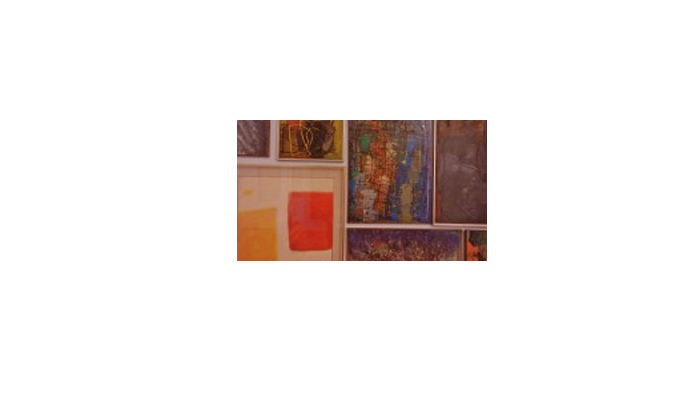
One of the construction company‘s associates was the father of Marieda and the newly married couple were among the first  dwellers. Antonio Boschi was an engineer working for Pirelli, with a penchant for innovations. Marieda was a ceramicist. Both participated in the effervescent circles of intellectuals and artists of the Milan between the wars. They believed in progress, in explorations of color and form, in the blend of technical advances and aesthetics. All of the above were shared by the artists they encouraged and collected. The paintings hang from floor to ceiling pressed against each other, ignoring the skills of effective display, just determined to be present. It is an orgy of color, an overdose of some good and some excellent art and a unique environment.

Works of De Chirico and his brother Alberto Savinio hang next to works of Umberto BoccioniMario Sironi and Lucio Fontana. Sironi completed a dining room set of furniture also on display. The reduced and crammed space is not a hindrance to the spectacular richness of the exhibits. Milan and the pictorial research of the first sixty years of the XX century are there on the walls as a symbol of the vitality of a period and of a couple who witnessed the before and the after of the Second World War carnage.

TAKE THE STAIRS

As all architectural items, stairways fulfill a dual function: a utilitarian one connecting two vertical planes and an aesthetic one enhancing the decorative aspect of a building. On both accounts, they are the spine of a complex space, and like its. Biological counterpart they channel and connect all traffic from above to below and the other way around.

Unlike doors or windows, stairways express with. The strongest voice the language of a building. Hollywood made them the focal point of many a movie’s narrative. Film stars descend them as drama reaches its climax. Think of Gloria Swanson in. Sunset Boulevard”. Or ascend them to tragedy as. Kim Novak did in the ever hypnotic “Vertigo.” Busby Berkeley in a much lighter. Mood concocted his candied choreographies around fanciful stairways.

Experimental, royal, magnetic or prosaic they are leading supporters. Of some powerful scenography.  They sustain the manner of thinking from which the rest of a building assembles its personality. Being primordially a functional feature, they insist on conveying something else, of radiating a message.

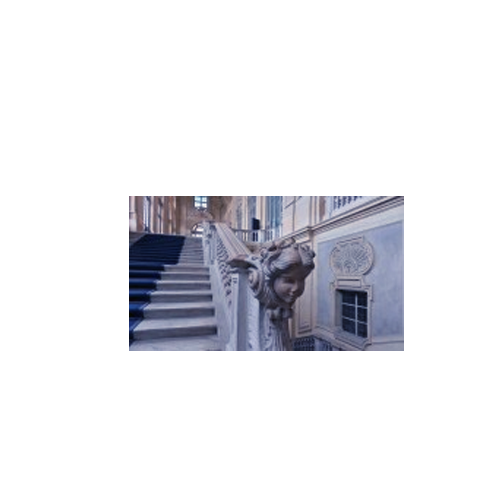
Filipppo Juvarra must have reflected upon them three hundred. Years ago when he designed a magnificent baroque palace attached to the old medieval castle in the center of Torino, the Plazzo Madama. The project was never. Completed, except for the façade and the internal stairwell. This work of theatrical proportions stands, deprived of its organic parts, as a radical example of architecture. As an accidental folly, a majestic ornament without its natural audience. Yet, fully self-contained in its seduction.